President Trump announced this week he will immediately petition the Supreme Court for a rehearing in the birthright citizenship case. The move comes after the justices struck down his executive order on June 30, 2026. This is not some minor legal squabble. It strikes at the heart of what it means to be an American and who gets to claim that birthright.
Trump called the decision a “miscarriage of justice” on Truth Social. He declared that American citizenship is not for sale and vowed to keep pushing. The rehearing request lands in a legal system where such petitions almost never succeed after a full merits ruling. Still, the stakes demand the fight.
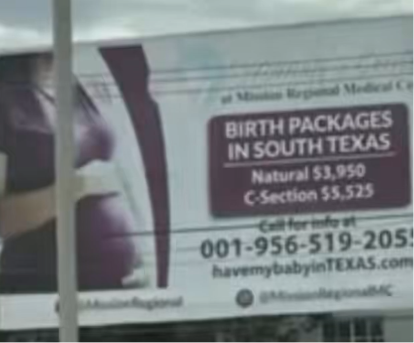
🚨 BREAKING: President Trump announces he is filing for a RE-HEARING with the US Supreme Court on birthright citizenship after an ANCHOR BABY HOSPITAL was discovered in Texas
“Signs and Billboards are being put up all over our Southern Border, and Mexico, advertising BIRTHRIGHT… pic.twitter.com/LM0zAnnAc8
— Nick Sortor (@nicksortor) July 8, 2026
The Executive Order That Sparked the Fire
On his first day back in office, January 20, 2025, Trump signed Executive Order 14160. It directed federal agencies to stop recognizing citizenship for children born in the United States to mothers who were either unlawfully present or only temporarily here on visas, unless the father was a U.S. citizen or lawful permanent resident.
The order rested on a straightforward reading of the 14th Amendment’s Citizenship Clause: “All persons born or naturalized in the United States, and subject to the jurisdiction thereof, are citizens of the United States and of the State wherein they reside.”
Trump’s position held that “subject to the jurisdiction thereof” carries real meaning. It requires more than just physical presence on U.S. soil. It demands full political allegiance to this country. Illegal immigrants and temporary visitors owe primary loyalty elsewhere. Their children should not automatically receive the full benefits of American citizenship.
This was never about punishing babies. It was about ending a system that incentivizes illegal entry and turns citizenship into something that can be gamed through birth tourism or chain migration.
47
Signs and Billboards are being put up all over our Southern Border, and Mexico, advertising BIRTHRIGHT CITIZENSHIP, with “Deliveries starting at $4000.” Likewise, similar signs going up all over our Country. pic.twitter.com/tcKgvffMAP— Major Anthony Jones (@majorbrainpain) July 9, 2026
What the Court Actually Did
The Supreme Court ruled 6-3 that the executive order was unlawful. Chief Justice John Roberts wrote the majority opinion. It held that children born to parents who are unlawfully or temporarily present in the United States are “subject to the jurisdiction” of this country and therefore citizens at birth under the 14th Amendment.
The Court leaned heavily on English common law traditions of jus soli — citizenship by soil — and on the 1898 decision in United States v. Wong Kim Ark. That case involved a child born to legal Chinese residents who were domiciled here. The majority treated the exceptions in that precedent as narrow and closed: diplomats, hostile occupying forces, and certain tribal members.
Justice Brett Kavanaugh concurred in the judgment but split on the reasoning. He agreed the order violated federal statute but suggested Congress could pass legislation creating exceptions consistent with the Constitution. He did not endorse the majority’s sweeping constitutional holding.
Three justices dissented. Justice Clarence Thomas, joined by Justice Neil Gorsuch, wrote a lengthy opinion arguing that the original meaning of the Citizenship Clause required domicile and primary allegiance. The clause was meant to secure citizenship for freed slaves and those similarly situated after the Civil War and Dred Scott, not to hand automatic citizenship to children of foreign nationals who have no permanent tie to America.
Justice Samuel Alito filed a separate dissent calling the decision a serious mistake with profound historical consequences. He emphasized that “subject to the jurisdiction thereof” means exclusive allegiance to the United States, not divided or temporary subjection.
The core split is clear. The majority saw broad territorial birthright. The dissenters saw a clause rooted in allegiance and domicile, consistent with the amendment’s purpose to repudiate Dred Scott without creating a magnet for foreign nationals.
Mexico asserting jurisdiction on their illegal aliens abroad further bolsters the Dissenter’s case with regards to Birthright Citizenship.
Making it crystal clear that they are not in fact “subject to the jurisdiction” of the United States of America in the manner that the…
— ButlerofThanos (@ButlerofThanos) July 9, 2026
Why Trump Is Asking for Rehearing
Trump’s petition will argue the Court got the original public meaning wrong. The phrase “subject to the jurisdiction thereof” was understood at ratification to exclude those who owe allegiance to another sovereign. Senate debates around the 14th Amendment and the Civil Rights Act of 1866 repeatedly distinguished between those fully under U.S. political jurisdiction and those who were not — diplomats, invading armies, and by logical extension, those here illegally or only transiently.
Wong Kim Ark itself involved parents who were legal, domiciled residents, not illegal entrants or short-term visitors. The dissenters correctly noted that extending it to cover every person who happens to give birth on U.S. soil ignores both text and history.
The executive order was a good-faith attempt to restore the proper understanding without waiting for Congress or a constitutional amendment. The Court rejected that attempt in sweeping terms. Trump is right to demand the justices take another look. The ruling creates real-world consequences: hundreds of thousands of births each year involving non-citizen parents now carry automatic citizenship, complete with future chain migration rights, access to benefits, and eventual voting power.
This is not settled law in any permanent sense. It is one Court’s interpretation at one moment in time.
The Odds of Success Are Long — But That Misses the Point
Supreme Court rehearing petitions after full argued cases almost never succeed. The Court has not granted rehearing in a way that meaningfully changed a merits outcome in argued cases for decades. Rule 44 requires exceptional circumstances. Simply re-arguing the same points, no matter how forcefully, rarely moves the needle.
A 6-3 decision with the Chief Justice in the majority makes a grant even less likely. There are no new facts here. This was pure legal interpretation after extensive briefing and oral argument.
Yet filing the petition still serves a purpose. It keeps the issue alive. It forces the record to reflect continued disagreement at the highest level. It signals to Congress and the public that the executive branch views the current interpretation as incorrect and unsustainable. And it buys time while other pressure points — legislation, future appointments, public debate — develop.
The Real Stakes Go Far Beyond One Case
Birthright citizenship as currently interpreted creates powerful incentives. It rewards illegal presence. It fuels birth tourism industries that treat American citizenship as a commodity. It sets up future claims on the welfare state, education system, and political process by people whose parents never intended full integration or even legal status.
The 14th Amendment was a post-Civil War corrective for a specific evil: the denial of citizenship to people born here who owed no other allegiance. It was never designed as a global invitation or a workaround for immigration enforcement.
Trump’s order tried to draw that line back to something closer to the original understanding. The Court erased it. The rehearing request is the immediate next step in pushing back.
American citizenship should mean something. It should reflect allegiance, not just geography. The fight to restore that meaning did not end on June 30. It just entered a new phase.